Insights & Expertise
Expert guides, exam strategies, and career advice for aspiring financial advisors

How to Break Into Financial Advising With No Experience
Think you need years of experience to become a financial advisor? Think again. Here's the real, step-by-step path from zero to licensed advisor.
Financial Advisor Career Paths: Which Role Is Right for You?
From investment broker to high net worth wealth manager — explore the four main financial advisor career paths and find out which one fits your goals.
How to Find a Firm That Will Sponsor and Train You as a New Advisor
Sponsorship is the key that unlocks your financial advisor career. Here's how to find the right firm, what to look for, and how to land the offer.
What Licenses Do You Need to Become a Financial Advisor?
Confused about financial advisor licensing? Here's a plain-English breakdown of the licenses you'll need, how to get them, and what each one allows you to do.
How Much Do Financial Advisors Really Make? (Honest Salary Guide)
Skip the inflated numbers. Here's an honest, realistic breakdown of financial advisor salaries at every career stage — from year one to top producer.

Building Your Client Base From Scratch: A Beginner's Playbook
No clients, no problem. Here's the proven playbook new financial advisors use to build a thriving book of business from zero.
The Complete Series 7 Exam Study Guide: How to Pass on Your First Try
Everything you need to know to pass the Series 7 exam — study timeline, top topics, practice strategies, and the mistakes that trip up most candidates.
Financial Advisor vs. Financial Planner: What's the Difference?
These titles are often used interchangeably — but they mean very different things. Here's what separates a financial advisor from a financial planner and which path is right for you.
Top 10 Firms That Sponsor the Series 7 for New Advisors in 2025
Not all sponsoring firms are created equal. Here's a detailed breakdown of the top 10 firms actively hiring and sponsoring new financial advisors in 2025.
A Day in the Life of a Financial Advisor: What the Job Really Looks Like
Forget the Hollywood version. Here's what a real financial advisor's day actually looks like — from morning client calls to afternoon prospecting and everything in between.

Series 7 vs. Series 65: Which License Do You Actually Need?
Series 7 or Series 65 — or both? Understanding which license fits your career goals can save you months of studying the wrong material.
How to Pass the Series 7 Without a Finance Degree
No finance background? No problem. Thousands of career changers pass the Series 7 every year. Here's exactly how they do it — and how you can too.
Why Military Veterans Make Outstanding Financial Advisors
Discipline, leadership, and mission focus — the skills that make great soldiers also make great financial advisors. Here's why veterans thrive in this career.
Why Former Teachers Make Exceptional Financial Advisors
If you can explain complex ideas simply and build trust with a room full of strangers, you already have the core skills of a great financial advisor.
Fee-Only vs. Commission-Based: Which Advisor Model Is Right for Your Career?
The compensation model you choose shapes everything about your practice — your clients, your income, and your daily work. Here's how to decide.
The First Year as a Financial Advisor: Your Survival Guide
Year one is the hardest — and the most important. Here's the honest guide to surviving and thriving in your first 12 months as a financial advisor.
Companies That Sponsor Series 7 Candidates in 2026
Looking for a firm to sponsor your Series 7 in 2026? Here's a comprehensive guide to the companies actively sponsoring candidates — and what each one offers.
Can You Take the Series 7 Without a Broker-Dealer?
Many aspiring advisors ask: can I just register for the Series 7 on my own? The short answer is no — but here's exactly why, and what your options are.

How Long It Takes to Get Sponsored for the Series 7
From first application to exam day — here's a realistic timeline for getting Series 7 sponsored, including what can speed up or slow down the process.
Do Financial Advisor Training Programs Sponsor the Series 7?
Training programs and Series 7 sponsorship often go hand in hand — but not always. Here's what to look for and what questions to ask before you commit.

Series 7 Sponsorship vs Self-Study Paths Explained
Sponsored by a firm or going independent? Here's a clear breakdown of both paths — the pros, cons, costs, and which one makes sense for your career goals.
What Broker Dealers Look for Before Sponsoring Series 7 Candidates
Getting sponsored isn't automatic. Here's exactly what broker-dealers evaluate before agreeing to sponsor a Series 7 candidate — and how to make yourself the obvious choice.
Series 7 Sponsorship Programs in New York vs Florida
Two of the biggest financial services markets in the US — but they're very different. Here's how Series 7 sponsorship opportunities compare between New York and Florida.
Can Remote Firms Sponsor the Series 7?
Remote work has transformed financial services. But can you get Series 7 sponsored by a firm you'll never visit in person? Here's the complete answer.
How Recruiters Find Series 7 Sponsorship Candidates
Financial services recruiters are actively looking for Series 7 sponsorship candidates — but they're not always looking where you think. Here's how to get found.
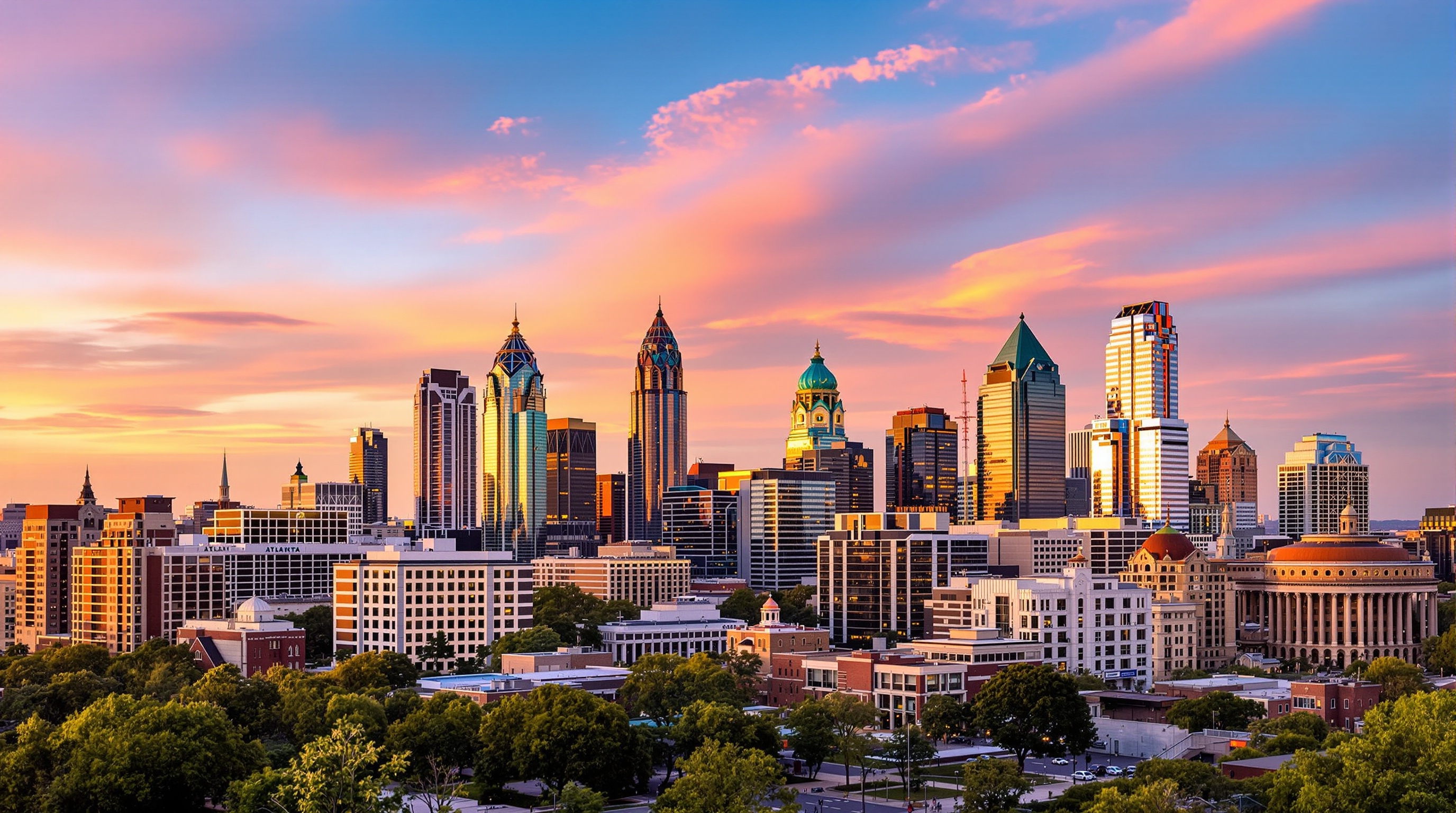
Series 7 Sponsorship in Atlanta, GA: The South's Financial Capital
Atlanta is one of the fastest-growing financial services markets in the Southeast. Here's how to find Series 7 sponsorship in Georgia's largest city — and why it's a smart career move.
Series 7 Sponsorship in Charlotte, NC: America's Second-Largest Banking City
Charlotte is home to Bank of America, Wells Fargo's East Coast hub, and dozens of major financial firms. Here's why it's one of the best cities in the US for Series 7 sponsorship.
Series 7 Sponsorship in Seattle, WA: Breaking Into the Pacific Northwest
Seattle's tech-driven wealth explosion has created an extraordinary market for financial advisors. Here's how to get Series 7 sponsored in one of America's most dynamic cities.
Series 7 Sponsorship in Boston, MA: New England's Financial Hub
Boston is home to Fidelity, State Street, and one of the highest concentrations of financial firms in the US. Here's how to land Series 7 sponsorship in this world-class financial city.
Series 7 Sponsorship in Denver, CO: The Mile High City's Rising Financial Scene
Denver is one of the fastest-growing financial services markets in the Mountain West. Here's why it's an ideal city to launch your Series 7 career.
Series 7 Sponsorship in New York City: The Ultimate Guide
New York City is the global capital of finance. Here's everything you need to know about getting Series 7 sponsored in the most competitive — and most rewarding — financial market on Earth.
Series 7 Sponsorship in Chicago, IL: The Midwest's Financial Capital
Chicago is home to the CME Group, dozens of major financial firms, and one of the largest concentrations of corporate wealth in America. Here's how to get Series 7 sponsored in the Windy City.
Series 7 Sponsorship in Miami, FL: South Florida's Booming Wealth Market
Miami has become one of the hottest financial markets in the US, fueled by Latin American wealth, crypto billionaires, and a massive influx of high-net-worth relocators. Here's how to get Series 7 sponsored.
Series 7 Sponsorship in Los Angeles, CA: Financial Advising in America's Second City
LA's entertainment wealth, real estate fortunes, and booming tech sector make it one of the highest-earning markets for financial advisors in the US. Here's how to get sponsored.
Series 7 Sponsorship in Dallas & Houston, TX: The Lone Star State's Biggest Markets
Texas has no state income tax, a booming energy economy, and two of the largest financial advisory markets in the US. Here's everything you need to know about Series 7 sponsorship in Dallas and Houston.
Financial Advisor Career in California: A Complete State Guide
California has five of the top financial advisory markets in the US. Here's everything you need to know about building a financial advisor career in the Golden State.
Series 7 Sponsorship in Phoenix & Scottsdale, AZ
Phoenix and Scottsdale offer one of the fastest-growing Series 7 sponsorship markets in the US — driven by massive California and Illinois wealth migration, Charles Schwab's major operations, and Arizona's 2.5% flat income tax.
Series 7 Sponsorship in Nashville, TN: Zero Income Tax + HCA Healthcare
Nashville combines Tennessee's zero income tax on wages with HCA Healthcare's global headquarters and the US's fastest-growing major metro — creating one of the most compelling Series 7 sponsorship markets in America.
Series 7 Sponsorship in Minneapolis: Fortune 500 Capital of the Midwest
Minneapolis has more Fortune 500 headquarters per capita than any other major US metro — Target, Best Buy, US Bancorp, and Ameriprise Financial. For Series 7 advisors, the Twin Cities offer unmatched corporate executive advisory market depth.
Series 7 Sponsorship in Philadelphia: Main Line Wealth & Janney HQ
Philadelphia's Main Line is one of America's oldest and most concentrated HNW communities. Combine that with Janney Montgomery Scott's headquarters, Vanguard nearby, and costs 40% below NYC — and you have one of the East Coast's best-kept advisory secrets.
Series 7 Sponsorship in Las Vegas: Zero Tax + Wealth Migration Goldmine
Nevada's zero state income tax has turned Las Vegas into one of the US's fastest-growing HNW markets. California, New York, and Illinois wealth is flooding into Summerlin and Henderson — making Las Vegas a Series 7 advisor gold rush.
Series 7 Sponsorship in Columbus, Indianapolis, Kansas City & Milwaukee
These four Midwest cities offer some of America's best financial advisor career value — Fortune 500 headquarters, institutional training from Northwestern Mutual and Nationwide, and housing costs 25–40% below national average.
Series 7 Sponsorship in Portland, OR: Nike, Intel & the Silicon Forest
Portland's "Silicon Forest" — Nike's global HQ and Intel's largest worldwide campus — creates extraordinary equity compensation wealth in a mid-sized metro. RSU planning specialists here serve one of the most uniquely concentrated tech executive markets in the US.
Series 7 Sponsorship in Hartford, CT: New England Insurance Capital
Hartford is the global insurance capital — home to Aetna, The Hartford, and Travelers. For Series 7 advisors, this creates one of the most unique corporate executive advisory markets in the Northeast, at 35% below Boston costs.
Series 7 Sponsorship in Louisville, KY: Bourbon, Healthcare & Hidden Wealth
Louisville combines Humana's global headquarters, a thriving bourbon industry, and one of the most underrated HNW markets in the South — all with zero Kentucky state income tax on wages and costs 20% below the national average.
Series 7 Sponsorship in Oklahoma City, OK: Energy Wealth & No Income Tax
Oklahoma City is one of America's most underrated financial advisory markets — zero state income tax, oil and gas wealth, and a rapidly growing corporate sector create exceptional opportunities for Series 7 advisors with energy sector knowledge.
Series 7 Sponsorship in Omaha, NE: Berkshire Hathaway & Buffett Country
Omaha is home to Berkshire Hathaway, Mutual of Omaha, and one of the most sophisticated investing cultures of any mid-sized US city — making it a uniquely compelling market for Series 7 advisors who understand value investing and insurance planning.
Series 7 Sponsorship in Charleston, SC: Low Taxes, Boeing & Coastal Wealth
Charleston combines South Carolina's 7% top income tax with Boeing's major manufacturing campus, a booming technology sector, and one of the Southeast's most desirable lifestyle markets for HNW relocators from the Northeast.
Series 7 Sponsorship in Des Moines, IA: America's Insurance Capital West
Des Moines is America's second insurance capital — Principal Financial Group, Meredith Corporation, and Wells Fargo's home mortgage operations anchor one of the Midwest's most underrated financial advisory markets.
Series 7 Sponsorship in Wichita, KS: Aviation Capital & Koch Industries
Wichita is the aviation manufacturing capital of the world — Cessna, Beechcraft, Spirit AeroSystems, and the Koch Industries network create one of Kansas's most concentrated corporate executive advisory markets with exceptional cost-of-living advantages.
Series 7 Sponsorship in Jackson, MS: Emerging Market, Underserved Opportunity
Jackson is one of America's most underserved financial advisory markets — a growing healthcare and government sector, significant old-money wealth, and virtually no competition for qualified Series 7 advisors who understand the local market.
Series 7 Sponsorship in Providence, RI: New England Finance Within Boston's Orbit
Providence sits 45 minutes from Boston and 3 hours from New York — giving Series 7 advisors access to New England wealth networks at costs 30% below Boston. Brown University, RISD, and a resurgent manufacturing sector anchor a uniquely dynamic market.
Series 7 Sponsorship in Charleston, WV: Appalachian Energy Wealth & New Opportunities
Charleston, West Virginia is undergoing a quiet transformation — energy sector wealth from natural gas and coal transitions, state government clients, and some of the lowest cost-of-living in any state capital create compelling first-mover opportunities for Series 7 advisors.
Series 7 Sponsorship in Wilmington, DE: JPMorgan, DuPont Wealth & Corporate Law
Wilmington is America's corporate capital — more Fortune 500 companies are incorporated in Delaware than any other state. JPMorgan, Bank of America, and Wilmington Trust create one of the Mid-Atlantic's most compelling Series 7 sponsorship markets at 40% below Philadelphia costs.
Series 7 Sponsorship in Manchester, NH: Zero Income Tax & Boston Wealth Migration
New Hampshire's zero income tax has turned Manchester and Bedford into one of New England's fastest-growing HNW markets. High-income Boston commuters are flooding into NH — creating a self-renewing pipeline of wealthy clients for Series 7 advisors.
Series 7 Sponsorship in Billings, MT: First-Mover Opportunity in Big Sky Country
Billings is Montana's largest city — and one of America's most underserved financial advisory markets. Energy executives, agricultural wealth, and medical professionals create significant wealth concentration with virtually no competition for qualified Series 7 advisors.
Series 7 Sponsorship in Salt Lake City, UT: Goldman Sachs & Silicon Slopes
Salt Lake City combines Goldman Sachs's major operations center with a booming Silicon Slopes tech economy — creating one of the fastest-growing Series 7 sponsorship markets in the US at costs 40% below San Francisco.
Series 7 Sponsorship in Fargo, ND: Zero Income Tax & Agricultural Wealth
Fargo is North Dakota's largest city — and one of America's most underserved financial advisory markets. Zero state income tax, Bakken oil wealth, and significant agricultural assets create exceptional first-mover opportunities for Series 7 advisors.
Series 7 Sponsorship in Savannah, GA: Hyundai Plant & Historic Wealth
Savannah is one of the South's most compelling emerging financial advisory markets. The Hyundai EV plant bringing thousands of corporate executives, Port of Savannah expansion, and steady retiree in-migration create a self-renewing pipeline of wealthy clients.
Series 7 Sponsorship in Memphis, TN: FedEx HQ & Zero Income Tax
Memphis is home to FedEx's global headquarters — creating extraordinary demand for advisors specializing in corporate executive equity compensation. Tennessee's zero income tax maximizes take-home pay.
Series 7 Sponsorship in Pittsburgh, PA: PNC Bank, BNY Mellon & UPMC
Pittsburgh is home to PNC Bank and BNY Mellon — two of the nation's largest financial institutions — creating extraordinary institutional career opportunities alongside UPMC's massive physician wealth.
Series 7 Sponsorship in Cleveland, OH: KeyCorp, Cleveland Clinic & Progressive
Cleveland is home to KeyCorp — one of the nation's largest banks — alongside Cleveland Clinic (world top-ranked hospital) and Progressive Insurance, creating extraordinary advisory opportunities with lower competition than Columbus.
Series 7 Sponsorship in Grand Rapids, MI: Amway HQ & Medical Mile
Grand Rapids is home to Amway's global headquarters — creating extraordinary wealth concentration among Amway executives and the DeVos and Van Andel families. Spectrum Health's Medical Mile is one of the nation's most concentrated healthcare research corridors.
Series 7 Sponsorship in Virginia Beach, VA: Military Wealth & Dollar Tree HQ
Virginia Beach sits next to the world's largest naval base — creating one of the nation's most concentrated and loyal military officer advisory markets. Dollar Tree's global headquarters adds corporate executive wealth, while the oceanfront creates luxury real estate investor demand.
Series 7 Sponsorship in Spokane, WA: Zero Income Tax & Inland Empire Wealth
Spokane gives advisors Washington State's zero income tax advantage with dramatically lower competition than Seattle. Eastern Washington's agricultural and timber wealth represents one of the most underserved HNW advisory markets in the Pacific Northwest.
Series 7 Sponsorship in Tucson, AZ: Foothills Retirees, Raytheon & UA Medicine
Tucson hosts one of the nation's most concentrated affluent retiree populations in the Catalina Foothills and Oro Valley — many relocated from Chicago, Detroit, and New York bringing $3–$10M+ in accumulated wealth. Raytheon and UA add defense and medical professional depth.
Series 7 Sponsorship in Albuquerque, NM: Sandia Labs, Kirtland AFB & Intel
Albuquerque is home to Sandia National Laboratories — one of the nation's premier nuclear research facilities — and Kirtland Air Force Base, creating extraordinary demand for federal employee retirement planning and deferred compensation management. Intel's semiconductor campus adds tech professional wealth.
Series 7 Sponsorship in Rochester, MN: Mayo Clinic & IBM — Best Per-Capita Opportunity in the Midwest
Rochester MN is arguably the most compelling per-capita wealth opportunity in the entire Midwest. Mayo Clinic concentrates extraordinary physician and surgeon wealth ($400K–$2M+ earners) in a small city with dramatically fewer advisors than any major metro. The advisor-to-HNW-client ratio is among the most favorable in the US.
Series 7 Sponsorship in St. Louis, MO: Edward Jones & Stifel HQ — The Broker-Dealer Capital
St. Louis is home to both Edward Jones and Stifel Financial headquarters — two of the nation's most prominent broker-dealers — creating unparalleled institutional career support. Boeing, Anheuser-Busch InBev, and Centene Corporation add significant corporate executive wealth.
Series 7 Sponsorship in Cincinnati, OH: P&G, Kroger & Fifth Third Bank
Cincinnati is home to Procter & Gamble, Kroger, Macy's, and Fifth Third Bank — four Fortune 500 companies — creating extraordinary corporate executive wealth. The tri-state market (OH/KY/IN) expands the advisory opportunity significantly beyond the metro area.
Series 7 Sponsorship in Raleigh, NC: Research Triangle Park — The Fastest-Growing Tech Market
Raleigh is one of the fastest-growing metros in the US — creating a self-renewing pipeline of new wealthy clients. Research Triangle Park concentrates IBM, Cisco, SAS Institute, and hundreds of biotech firms with lower competition than Charlotte or Atlanta.
Series 7 Sponsorship in Stamford, CT: Greenwich Hedge Fund Capital — Highest Earning Potential in the US
Stamford is the gateway to Greenwich — the hedge fund capital of the world. Bridgewater Associates, AQR Capital, and hundreds of multi-billion dollar funds create advisory earning potential unmatched in most US markets. Top producers earn $380K–$1.2M+.
Series 7 Sponsorship in Boise, ID: Micron Technology HQ & California Tech Migration
Boise is one of the fastest-growing metros in the US — driven by Micron Technology's global headquarters and massive California tech migration. Micron's stock compensation programs create significant equity management advisory demand with lower competition than any West Coast market.
Series 7 Sponsorship for Federal Employee Specialists: TSP, FERS & CSRS Planning
Federal employees represent one of the most underserved and loyal HNW client segments in the US. Advisors who specialize in TSP management, FERS/CSRS retirement planning, and federal benefit optimization can build extraordinarily stable practices in cities like Huntsville, Dayton, and Albuquerque.
Series 7 Sponsorship for Physician Wealth Specialists: The $400K+ Client Opportunity
Physicians are the most accessible ultra-high-income client segment for new financial advisors. With average physician incomes of $300,000–$600,000+ and complex financial needs (student loan management, practice ownership, malpractice insurance), physician specialization creates extraordinary practice-building opportunities.
Series 7 Sponsorship for Corporate Executive Specialists: RSUs, Stock Options & Deferred Compensation
Corporate executives with RSUs, stock options, and deferred compensation plans represent the most complex and highest-value advisory clients. Advisors who master equity compensation planning can build seven-figure practices serving Fortune 500 executives in cities like Dallas, Chicago, and Atlanta.
Test Your Series 7 Knowledge
Take our 10-question practice quiz and see if you're ready for the exam
Ready to Start Your Journey?
Get Series 7 sponsorship and launch your financial advisor career today